Leg Length Difference (Leg Length Discrepancy)
Many Australians live with a slight difference in their leg length and may not even be aware of it. However, when the difference is notable, it can cause significant pain. If left untreated, this condition can impact your posture and cause ongoing discomfort in your hips, knees, or lower back.
At Gold Coast Foot Centres, our experienced podiatrists assess, diagnose, and manage leg length differences using evidence-based techniques and customised orthotic treatments.
If this is a concern for you, please take action and book an appointment today.
What is Leg Length Difference?
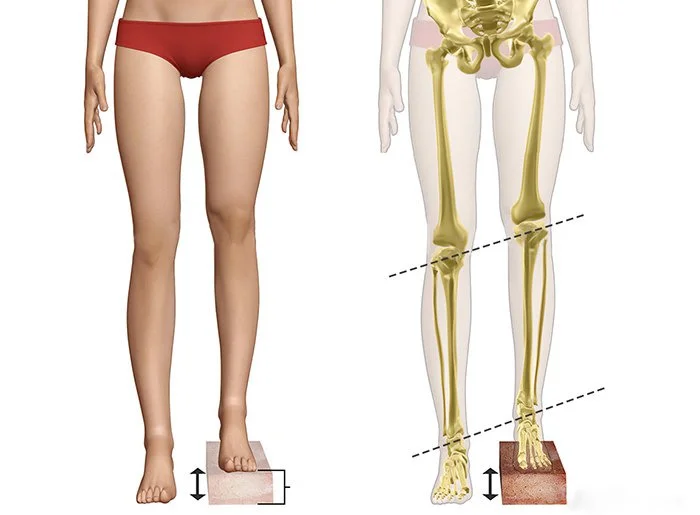
A leg length difference is exactly what it sounds like. A difference in the length of each leg. Also known as a leg length discrepancy, it can create an imbalance that affects your walking, standing, and movement. Over time, this can place uneven stress on your spine, hips, knees, and feet.
There are two main types of leg length differences:
Structural leg length difference: When one bone in the leg (femur or tibia) is physically shorter than the other.
Functional leg length difference: Both bones are equal in length. However, poor posture, muscle tightness, or joint misalignment causes the legs to function as though one is shorter than the other.
Structural vs Functional Leg Length Difference
Both structural and functional leg differences can affect your biomechanical alignment. If left untreated, they can lead to leg pain and discomfort. Here is some more information about them.
Structural Leg Length Difference
A structural leg length difference is caused by an actual variation in bone length. This can be present from birth. However, it can also develop during childhood growth or occur after a bone fracture, surgery, or other trauma.
Even a difference as small as one centimetre can alter your gait. This can result in uneven pressure being experienced through the hips, knees, and feet.
Functional Leg Length Difference
A functional leg length difference occurs when one leg appears shorter than the other. Typically, this is due to muscle imbalance, pelvic tilt, or foot posture issues.
Tight hip muscles, scoliosis, or overpronation can all change the way the body moves. Subsequently, it can create a biomechanical imbalance without there being a true difference in bone length.
Our experienced team of podiatrists will assess both structural and functional causes. This will help them to determine the best form of treatment for your long-term relief.
How Common is Length Leg Difference?
Leg length difference is extremely common, with some studies suggesting upwards of 90% of people are afflicted with a minor difference of one centimetre. While the number of people with a difference that exceeds two centimetres is much less common, it still affects a significant portion of the Australian population.
When the discrepancy exceeds two centimetres, it can lead to discomfort and postural issues. Additionally, an uneven gait can cause lower back pain, hip pain, knee discomfort, or an overall feeling of imbalance.
Signs and Symptoms of Leg Length Difference
Symptoms of leg length discrepancy can vary depending on the cause and the degree of the difference. However, some of the most common signs to look out for include:
Uneven hips or shoulders when standing.
One leg or foot feels heavier or more tired than the other.
Limping or walking asymmetry.
Pain in the lower back, hips, knees, or ankles.
Frequent muscle tightness, especially in the calves or hamstrings.
One shoe wears down faster than the other
Difficulty standing for long periods
Your pelvis appears uneven when standing
Associated Pain and Posture Problems
Since the body compensates for imbalances, a leg length difference can impact your posture. This compensation can lead to a range of issues, including:
Pelvic tilt
Spine misalignment
Increased strain on the joints and muscles
Many patients also experience a range of secondary symptoms. These include hip bursitis, foot pain, or chronic back discomfort.
If left untreated, the imbalance may contribute to long-term joint wear. It can also lead to discomfort that can affect your daily movement.
What Are the Main Causes and Risk Factors?
There are several reasons why you can develop a leg length difference. Common causes include:
Congenital factors: Some people are born with one leg shorter than the other due to variations in their skeletal growth.
Growth plate injury: Damage during childhood or adolescence can have a major effect on your bone development.
Fractures or surgery: Improper bone healing or changes after surgery can alter the length of the bone.
Postural or muscular issues: If you are afflicted with tight hip flexors, scoliosis, or poor foot mechanics, it can create a functional leg length difference.
Arthritis or joint degeneration: Conditions that affect hip or knee joints can subtly shorten one limb over time.
Understanding the cause of your leg length difference is vital, as it will help our podiatrists to choose the most effective treatment plan for you. That is why we recommend you contact us to discuss your concerns as soon as they materialise.
How We Assess and Diagnose Leg Length Difference
At Gold Coast Foot Centres, we understand the importance of distinguishing between structural and functional leg length differences. That is why we take the time to accurately assess and diagnose your symptoms.
When you make an appointment at one of our clinics, your podiatrist will do the following:
Takes a full medical and activity history to determine what may be contributing to your symptoms.
Conduct a detailed biomechanical assessment.
Evaluate your posture, pelvic alignment, and gait.
Measure leg length using a precise standing X-ray assessment or clinical techniques.
Review what footwear you wear and when
Assess your foot and ankle function
We also use advanced gait analysis technology to examine how your legs, hips, and feet move while walking. This enables us to create a comprehensive treatment plan to restore your balance and alleviate pain.
If required, we may refer you for imaging or collaborate with your GP, physiotherapist, or orthopaedic specialist. Doing this will ensure we can provide you with the most complete care.
What Treatment Options Are There for Leg Length Difference?
The treatment options we will prescribe for you will typically depend on two factors. Whether your leg length difference is structural or functional, and how much it is affecting your comfort and mobility.
There are two main courses of treatment. Non-surgical and surgical. Here is what is involved with both.
Non-Surgical Treatment
Most cases of leg length difference can be managed successfully through more conservative care. The main options include:
Custom orthotics: Designed to support and correct foot mechanics and reduce strain on the joints.
Heel lifts or shoe inserts: These are used to equalise your leg length and stabilise your balance.
Footwear modifications: We provide guidance on finding suitable shoes that offer the most adequate cushioning and support.
Stretching and strengthening exercises: This is recommended for muscle tightness or weakness that contributes to your functional imbalance.
When Surgery or Referral Is Needed
Surgical intervention may be recommended in rare cases where the discrepancy is large or caused by structural bone differences. At Gold Coast Foot Centres, we work closely with local orthopaedic specialists to ensure you receive the right referral if surgery is required.
Why Choose Gold Coast Foot Centres?
Gold Coast Foot Centres has a long-standing reputation for excellence in podiatric care. Therefore, when you visit us for a leg length difference assessment, you’ll benefit from:
Being examined by experienced podiatrists who specialise in lower limb alignment and biomechanical analysis.
Customised orthotic heel lifts and shoe modifications that are designed with precision for your comfort
State-of-the-art gait analysis technology.
Comprehensive treatment plans that address both the root causes of leg length difference and relieve its symptoms.
Our compassionate podiatrists believe that every step you take should feel comfortable and balanced. That is why they are committed to helping you walk pain-free and with complete freedom of movement.
FAQs
-
A small difference in leg length is very common among Australians and usually doesn’t cause too much in the way of problems. It only really becomes a concern when it starts to affect your posture, balance, or causes you pain.
-
Generally, a difference greater than two centimetres in leg length is considered to be significant. Such a discrepancy may impact your gait and posture.
-
Yes. Custom orthotics and heel lifts can often balance leg length discrepancies. They may also improve your alignment and reduce pressure on your spine, hips, and knees.